
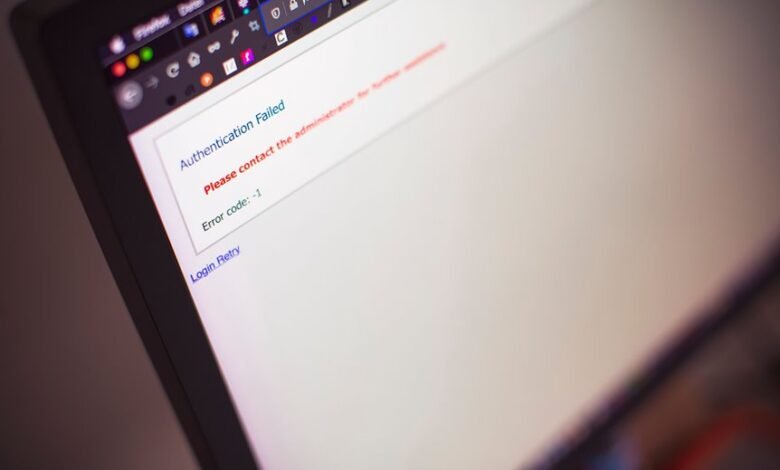
Multiple factors can block 90.150.204 login attempts. The discussion begins with identifying authentication, network, or policy issues, then proceeds to targeted fixes. Quick checks isolate the root cause, while documentation preserves traceability. Verification steps cover network access, VPN alignment, and firewall allowances. A disciplined, long-term framework aims to prevent recurrence, supported by logs and risk assessments. The approach remains pragmatic; the next steps reveal where uncertainties linger and what must be documented for resolution.
What Causes 90.150.204 Login Failures
There are multiple mechanisms that can cause login failures for the address 90.150.204, spanning authentication, network, and account policy factors. Unclear credentials impede successful verification, while DNS misconfig can misdirect services.
The system remains vigilant, isolating root causes and documenting findings. A disciplined approach ensures consistent conditions, enabling clear evaluation without conflating faults with user behavior or external interference.
Troubleshooting Quick Fixes for Access
Quick fixes for access focus on rapid, verifiable steps to restore connectivity without altering core configurations. The process emphasizes isolated checks, repeatable actions, and documented results.
A detached review notes that unrelated topic adjustments and filler content should remain separate from critical access controls. Proactive, methodical steps ensure clarity, reduce risk, and support users seeking freedom through dependable restoration.
How to Verify Network, VPN, and Firewall Settings
To verify access after addressing quick fixes, the process shifts to confirming that network connections, VPN status, and firewall rules operate as intended.
Network verification proceeds through structured checks, documenting results for login monitoring and auditing.
Systematic network diagnostics identify misconfigurations, while firewall adjustments align with security policies.
VPN troubleshooting confirms stable tunnels, preserving freedom and uninterrupted access to resources.
Long-Term Access Assurance and Prevention Steps
Long-Term Access Assurance and Prevention Steps establish a proactive framework to sustain reliable login capability, reduce recurrence of disruptions, and align security controls with evolving risk profiles.
The approach emphasizes disciplined login etiquette, structured authentication reviews, and timely password rotation.
It promotes autonomy through clear protocols, measured risk assessment, and documented responses, ensuring resilience, user trust, and uninterrupted access while maintaining rigorous, adaptable safeguards.
Frequently Asked Questions
Can 90.150.204 Be Used for Testing Login Loads?
A cautious evaluator notes that 90.150.204 can be used for testing login loads, but only with explicit authorization and controlled parameters. DoS testing and rate limiting must be implemented to prevent collateral impact and unauthorized disruption.
Are There Compatibility Issues With Older Browsers?
Compatibility issues may arise with older systems; some incompatible browsers fail to render properly, hindering login tests. The approach emphasizes proactive checks, mitigating legacy rendering problems while maintaining freedom to adapt tools for evolving compatibility standards under varying environments.
What Is the Typical Login Timeout Duration?
The typical login timeout varies by policy, but a common standard is five to fifteen minutes of inactivity, with session duration controlled; load testing feasibility informs adjustments to Browser compatibility, Access permissions, Role based access, Password policy, and Username requirements.
Do User Roles Affect Access Permissions?
Yes, user roles influence access permissions, shaping what actions are allowed. The distinction between roles vs permissions guides enforcement, while audit vs compliance ensures ongoing verification and accountability for access decisions. This approach supports precise, proactive governance and freedom.
Is There a Recommended Username Password Policy?
A cautious tale: a traveler never shares maps; similarly, a strong username policy and password security are essential. The policy should mandate unique usernames, minimum lengths, complexity, rotation, and multi-factor authentication for robust, proactive protection.
Conclusion
In conclusion, the 90.150.204 login workflow is a disciplined, methodical process that identifies root causes quickly and verifies every layer of access. By isolating network, VPN, and firewall variables, engineers implement verifiable fixes without destabilizing core configurations. Documentation and audit trails ensure traceability, while ongoing reviews and timely password rotation reduce recurrence. The approach keeps access reliable and secure, and, as always, safeguards stay in place, leaving issues resolved and progress firmly on track. It’s a well-oiled machine.